What's Current in
Physics + Astronomy
Image

Photo Credit
Matt Perko
UCSB researchers to collaborate in three of NSF's Quantum Leap Challenge Institutes
Image

Photo Credit
Matt Perko
Danyi Zhang, left, and Tamas Vami
Image

Photo Credit
Matthew Kapust/Sanford Underground Research Facility
The LUX-ZEPLIN main detector in a surface lab before installation underground.
Image

Photo Credit
NASA, ESA, Leah Hustak (STScI)
The rogue super-massive black hole compresses gas in its wake, forming a long “contrail” of young, blue stars. This unusual event happened when the universe was approximately half its current age.
Image

Photo Credit
NASA, ESA, Joseph Olmsted (STScI)
A quasar emits exceptional amounts of energy generated by matter falling into a supermassive black hole.
Image

Photo Credit
Cyano66 via iStock
If the mind is a symphony, the orchestra playing it remains obscured.
Image

Photo Credit
Brian Long
Co-PI Andrew Jayich will use the new technology to create ion traps like the one shown here, in which colors indicate independent electrodes to control trapped ions.
Image

Photo Credit
Courtesy Image

Image

Photo Credit
Lester Cohen/Getty Images Getty Images for Breakthrough Prize
Lily Collins and David J. Gross, 2026 Special Breakthrough Prize in Fundamental Physics winner speak onstage during the 12th Breakthrough Prize Ceremony at Barker Hangar on April 18, 2026 in Santa Monica, California.
Image

Photo Credit
Courtesy
UC Santa Barbara physics researcher Skyler Palatnik
Image

Photo Credit
Matt Perko
A researcher works in the lab of Ania Bleszynski Jayich
Image
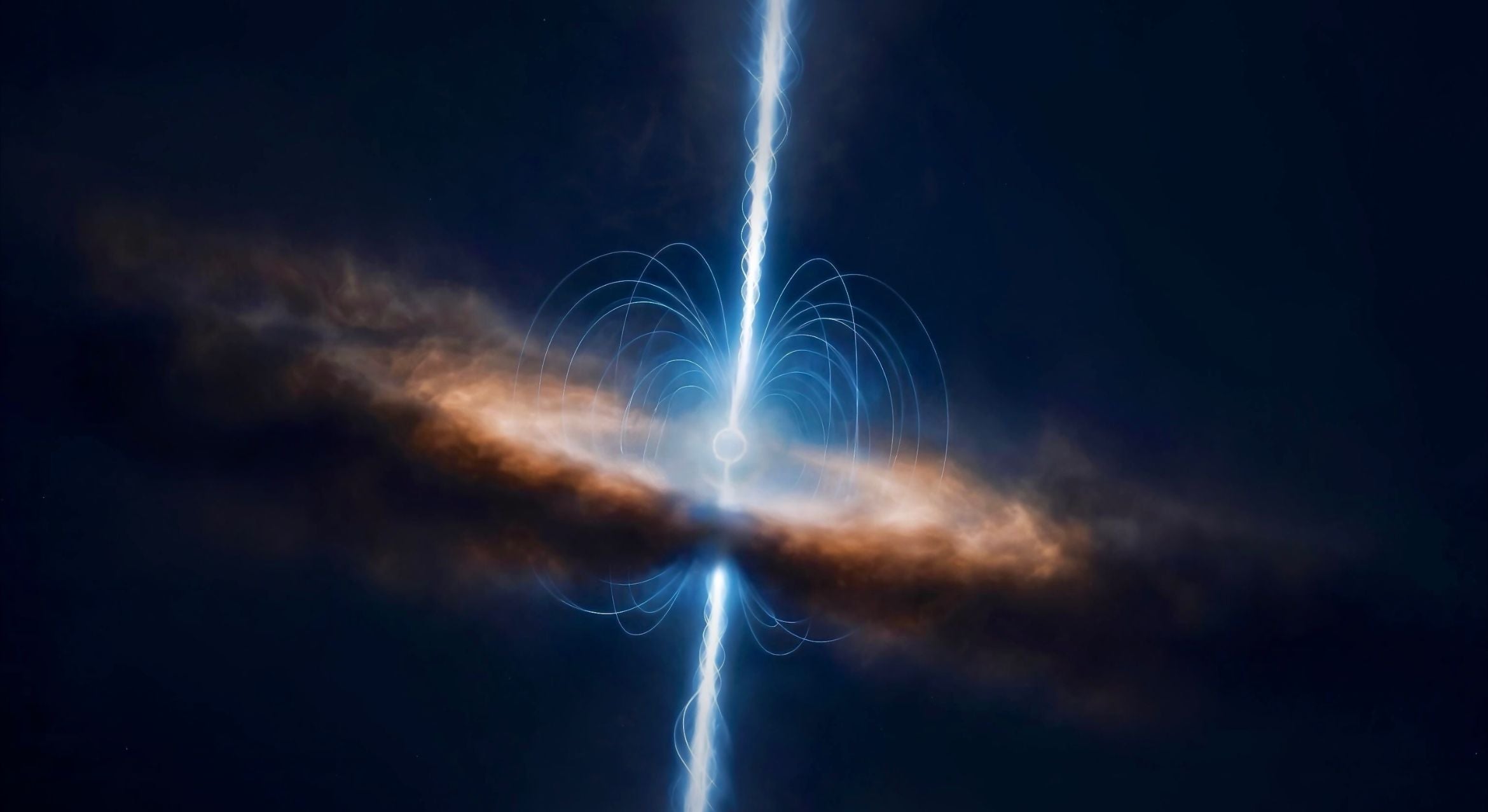
Photo Credit
Joseph Farah and Curtis McCully of LCO
A spinning magnetar twists space-time itself, causing the disk of material around it to wobble and produce the ultra-bright flashes of this peculiar kind of supernova.