Science policy education should start on campus
Although modern science has only been around for a few centuries, we’ve become quite adept at training students in the scientific method. But learning how to translate research insights into practical actions often isn’t part of a budding scientist’s curriculum.
UC Santa Barbara Assistant Professor Alexandra Phillips has put together a guide to help professors and administrators support their students' interests in ocean policy and build broader policy literacy across their campuses. The recommendations, published in npj Ocean Sustainability, are based on research and literature in education, sociology, policy and marine biology.
As concerns like climate change, plastic pollution and overfishing become increasingly dire, “We can't just train scientists in technical skills anymore,” said Phillips, a marine scientist by training but now a professor of environmental communication at UCSB’s Bren School of Environmental Science & Management.
“One of the issues is that all this training in policy doesn't happen at the university right now. It happens outside of it,” said Phillips, who served as an environmental policy fellow for Senator Alex Padilla. “But we have the resources and ability to do this in-house, as well, and we should.”
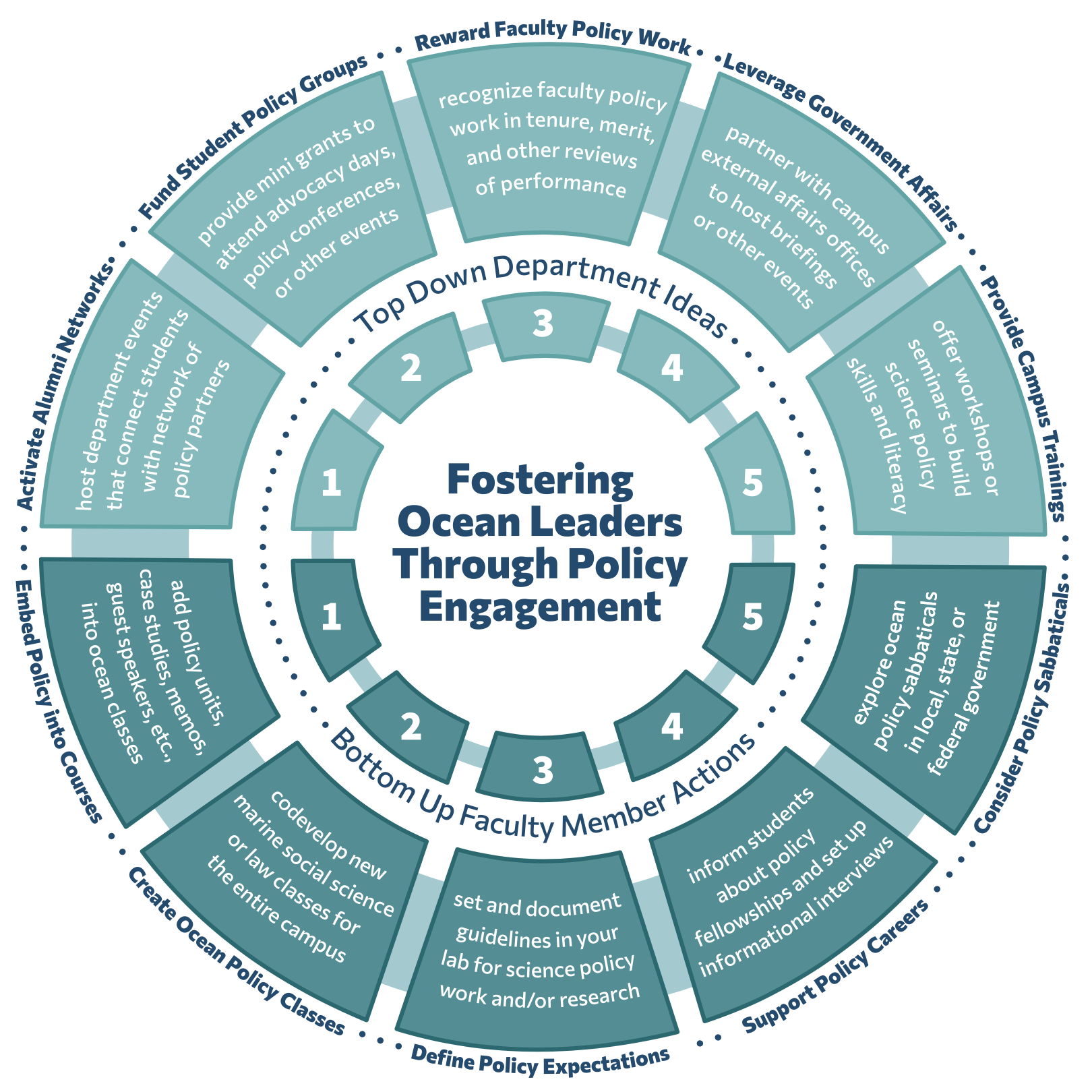
Phillips and her co-author Elizabeth D. Hetherington, at UC San Diego, devised ten strategies for supporting ocean policy prowess at the graduate and undergraduate levels. For faculty, they recommend actions like embedding ocean policy into existing courses and creating new offerings, as well as considering science policy-focused sabbaticals. For departments and institutions, they suggest funding opportunities for students to engage in policy work and leveraging the expertise of alumni and government affairs staff.
Share this article



Related Stories