A new UC Santa Barbara program aims to meet a growing need among students: support for managing stress and anxiety in everyday life.
Launched this winter, “Art of Wellness” combines meditation, creative exercises and informal community-building in a series of workshops open to all students. The program is led by France Winddance Twine, a sociology professor who recently stepped into the role of associate vice chancellor of culture and inclusive excellence, with a focus on mental health–related programming.
Held every other Wednesday at 2 p.m. in Mosher Alumni House Room 2104, “Art of Wellness” sessions help students develop skills and strategies to cope with stress and cultivate compassion. Each session includes a free lunch from locally owned South Coast Deli.
Twine said the idea emerged from both her professional background and what she has observed in recent years.
“Beginning during the pandemic and then afterwards, I noticed that I had more and more students who had anxiety disorders, had depression,” she said.
Before pursuing her academic career, Twine was employed as a mental health worker at the Institute of Psychiatry at Northwestern Memorial Hospital. Her initial area of specialization was with men and women struggling with eating disorders. A decade later while at UC Berkeley, she worked at the Mission Crisis Center providing outpatient clinical services. That experience, combined with what Twine has observed in the post-COVID era, a noticeable shift in student well-being, led her to think about how the university might expand its approach to support.
At the same time, she began exploring creative practices during the pandemic, taking part in online art programs and reconsidering the role of art in daily life.
“I started really thinking about art as a form of therapy,” she said.
The resulting program is designed to be accessible and low commitment. Workshops typically begin with a short meditation, followed by a guided art activity. Students are provided with materials and invited to participate at their own pace.
“They just have to show up,” Twine said.
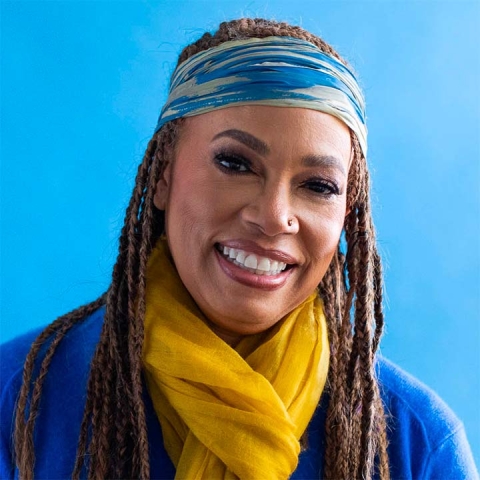
France Winddance Twine's research is distinguished by its breadth and depth. Twine has conducted field research in Brazil, Britain, UK and Spain. Twine is a research affiliate at Cambridge University where she is collaborating with the Sociology of Reproduction research...
In one recent session, students from diverse backgrounds created abstract drawings inspired by Pablo Picasso’s “Constellation” sketches, placing dots on paper and connecting them into images. The exercise is intended less as an art lesson and more as a way to shift attention and reduce stress.
“I want to help you get back to that state of non-judgment where you can just stop and doodle,” Twine said.
The workshops conclude with a shared lunch, which Twine sees as an important part of the experience. Students from different majors and backgrounds — including STEM, humanities and the arts — have attended, often bringing friends.
Attendance has ranged from eight to about a dozen students per session so far, with participation growing through word of mouth. Twine said some students have returned regularly and have begun incorporating techniques introduced in the sessions into their routines.
“I’m trying to provide a new tool, an interdisciplinary space, and an experience that doesn’t cost them any money,” she said, “that just creates a little sanctuary moment.”
The program also emphasizes flexibility and low pressure. Students are not required to share personal information or produce finished work, and no prior experience with art or meditation is needed.
“This is not about judgment,” Twine said. “This is about a space for you to play for 30 minutes.”
Twine said she hopes the program will complement existing campus resources by offering an additional, informal setting where students can build coping skills and connect with others.
“I want it to be a place where they can just show up and not feel like they have to perform,” she said.
“Art of Wellness” will continue through the spring quarter, with sessions scheduled every other week on Wednesdays. Twine plans to expand outreach and refine the program based on student feedback.
Her goal, she said, is straightforward: to give students practical tools and a supportive environment during what can be a stressful time.
“I just want them to feel that they can create a moment where they’re not stressed,” she said.
Share this article